

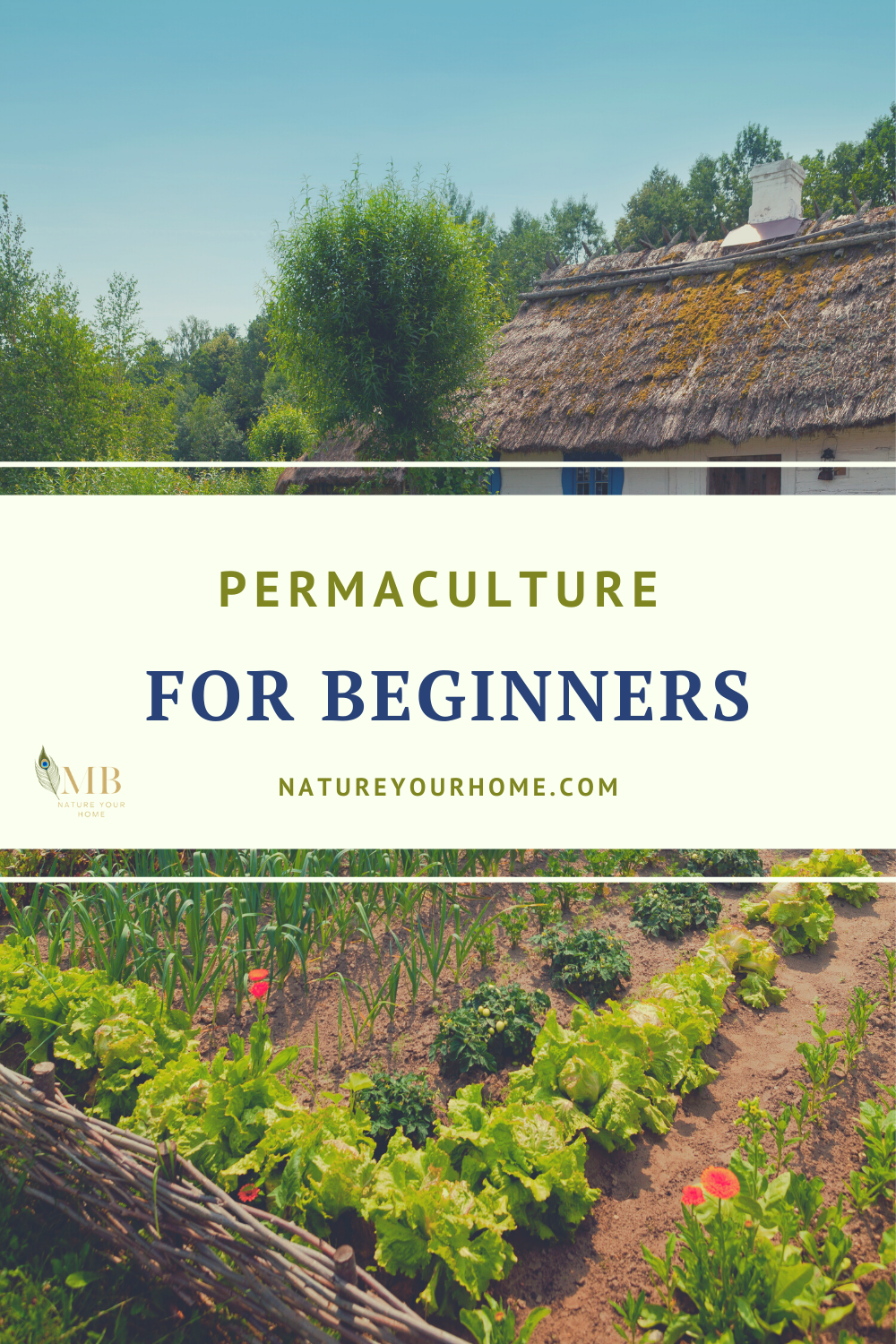
Permaculture provides hope for a better future. It is a blueprint for a sustainable way of life, and provides a series of principles and practices that help us develop systems for land, society and all aspects of our lives.
Before we delve a little deeper into how permaculture can be applied in the home and garden.
Disclaimer: This page contains affiliate links. If you choose to make a purchase after clicking a link, I may receive a commission at no additional cost to you. Thank you for your support!
Let’s take a look at the basics:
What is Permaculture?
It is a composite of the words ‘permanent’ and ‘agriculture’, or more broadly, ‘culture’. Most frequently it refers to food production and land management. In general, the central goals and ideals can also be apply it in all areas of our lives
It all boils down to three central ethics:
- Care for planet Earth
- Care for humankind
- Fair share, and a return of surplus to the system.
The term come from Australia in the 1970s by Bill Mollison and David Holmgren. Since then, it has spread around the globe. Permaculture includ a range of situations and at a range of scales – in home gardens and domestic settings, in communities, on farms, in businesses, and in landscape-scale ecosystem restoration.
By working with nature rather than fighting it, and keeping these three central ethics in mind – people have greened deserts, restored fertility, and created a huge range of thriving, abundant systems that truly can stand the test of time.
Remember, in order to truly care for planet and people, and truly embrace fairness, we need to meet our own needs without compromising the ability of future generations to meet their own. This is what permaculture is all about.
Permaculture Design
When we talk about permaculture design, we are referring to the process of creating and implementing enduring, resilient, regenerative systems. Permaculture goes beyond ethics, and also provides a methodological framework which help practitioners move far beyond the theoretical.
Those designing permaculture systems will follow a process which allows them to design such systems, taking into account all variables, and the unique properties of place, people, nature and time. Working with nature and its cycles, we can design systems which allow us to live lightly on our planet, and reduce our reliance on damaging systems.
Those designing permaculture systems will look at sectors – sunlight, wind and water. Patterns that shape our world. They will, when looking at land, go on to zoning, and think about patterns of human effort and movement. Through the design process, they will think about these things, and the inputs, outputs and characteristics of all the different elements in a system and how they interact.
Permaculture Design Principles
A starting point for many permaculture designers are the twelve design principles set forth by one of the founding fathers of permaculture, David Holmgren. These are:
- Catch and store energy.
- Obtain a yield.
- Apply self-regulation and feedback.
- Use and value renewable resources and services.
- Produce no waste.
- Design from patterns to details.
- Integrate rather than segregate.
- Use small and slow solutions.
- Value while using diversity.
- Use edges and value the marginal.
- Creatively use and respond to change.
Permaculture’s ethics and principles were originally applied predominantly to food production. But the ideas are now applied much more broadly – to every aspect of modern life. Permaculture begins on the page – in the theory. But it swiftly moves on to the field, to the community, to education and practice. The design process and the practices are all firmly rooted in the real world.
Applying Permaculture Ethics and Principles at Home
In order to understand permaculture a little better, let’s take a look at how we might begin to apply its ethics and principles in our own lives.
Firstly, we can look frankly at our choices and actions to see whether they adhere to the central ethics of permaculture. With each decision we make, we should ask ourselves whether we are truly caring for people and planet, and whether we are taking more than our fair share. If we do not like what we see, the principles can help us to move in the right direction.
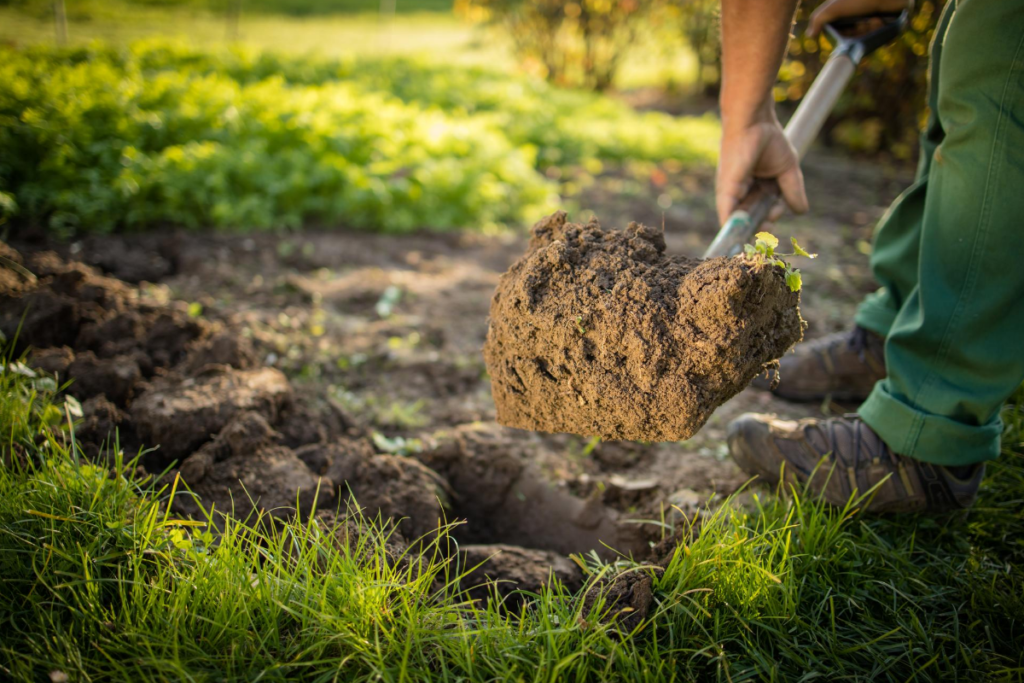
While permaculture ethics and principles are applied inside our homes and in other areas, it is in the garden where they are most commonly applied. As Geoff Lawton, a well known permaculture practitioner has said, ‘all the world’s problems can be solved in a garden’.
We can:
- Grow our own food, to reduce our reliance on damaging agricultural systems.
- Grow other resources and gain other yields, such as fuel, constructional and crafting materials, natural medicine, cleaning and beauty products etc..
- Sequester more carbon in soil and plants to help combat global warming.
- Care for, protect and improve the soil upon which we depend.
- Use water and energy wisely and well.
- Increase biodiversity in all its forms.
- Make sure nothing goes to waste.
In a permaculture garden, or another piece of land, the goal is about reconciling the needs of caring for the planet with humanity’s needs, and the needs of the wildlife. Everything gardens. We humans are not alone. But we humans to have an ability of affect and alter our surroundings to an unprecedented extent. Permaculture is all about making sure that we harness that power for positive change.
From forest gardening and ‘no dig’ gardens, to polyculture planting and compost creation – there are plenty of techniques to learn about. Using small, slow solutions, we can gradually improve our understanding, and move from the principles and pathways of permaculture towards regeneration,and towards the harmony with the natural world that it at the heart of all permaculture design.
“ The definition of Permaculture: Principles and Pathways Beyond Sustainability” , David Holmgren, 2002
Ready to take the first step towards creating a sustainable, self-sufficient lifestyle?
Explore the principles of permaculture in our comprehensive guide for beginners and unlock the secrets to harmonizing with nature while nurturing your home and garden. And if you’re eager to dive even deeper into the world of self-sufficiency, don’t miss out on the opportunity to supercharge your journey with the innovative resources provided by SelfSufficientBackyard.com.
Click here to discover how their products can empower you to transform your backyard into a thriving ecosystem of abundance and resilience. Seize the chance to cultivate a brighter future for yourself and the planet, starting right in your own backyard!
The Self-Sufficient Backyard: For The Independent Homesteader
You may READ ALSO :
